
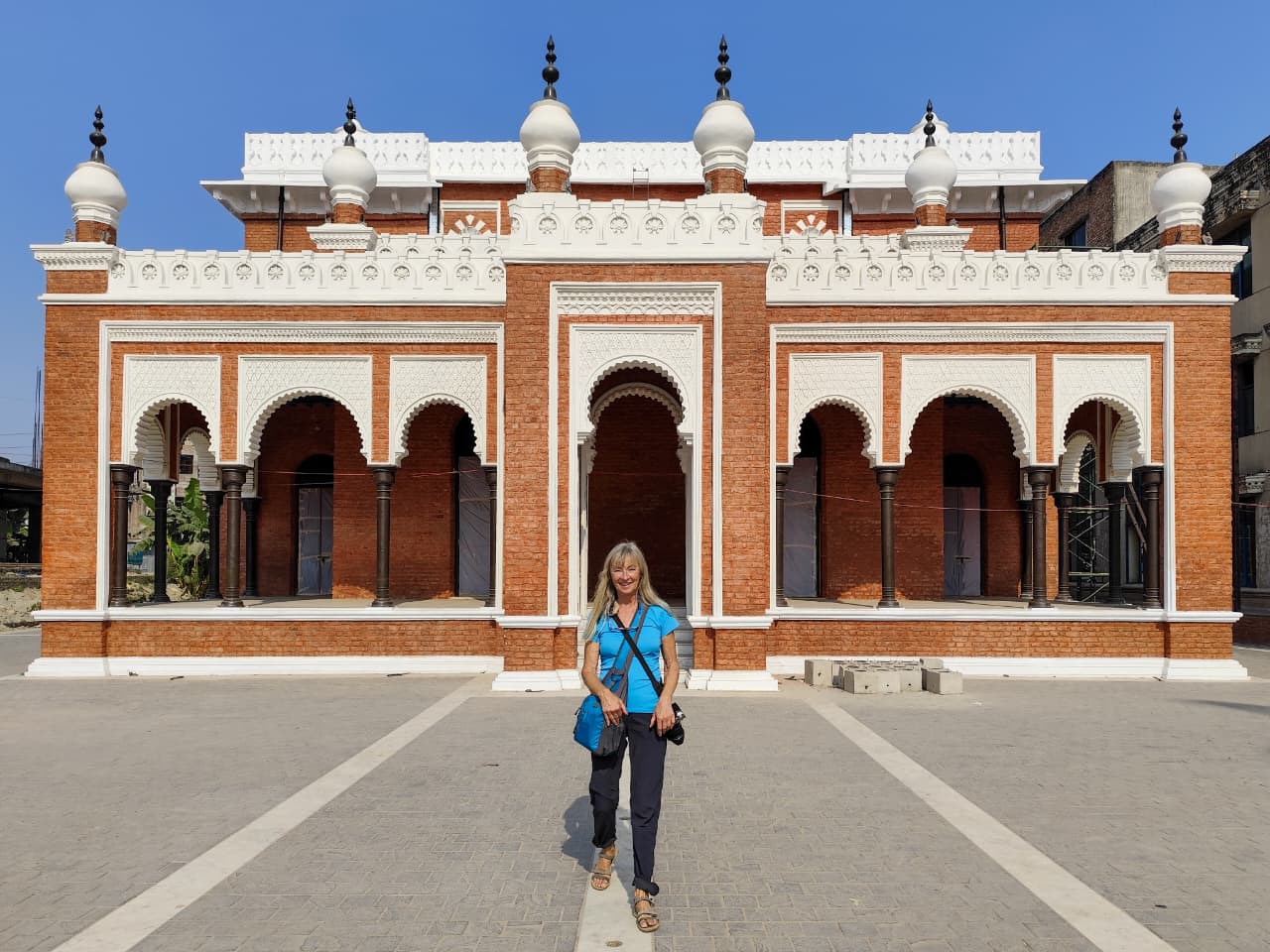
Old Dhaka, also known as Puran Dhaka, preserves some of the finest examples of Mughal-era architecture in Bangladesh. During the 17th century, when Dhaka served as the capital of Bengal Subah under the Mughal Empire, significant structures were built using local materials and imperial design principles. This guide provides a structural analysis of key monuments — Lalbagh Fort, Ahsan Manzil, and Tara Masjid — focusing on brickwork techniques, masonry materials, and historical context.
Historical Context of Mughal Rule in Dhaka
The Mughal Empire gained firm control over Bengal in the early 17th century. In 1608, Dhaka (then Jahangirnagar) was declared the provincial capital by Subahdar Islam Khan. This period saw rapid urban development with mosques, forts, palaces, and administrative buildings constructed in the Mughal style, characterized by symmetry, red brick, marble inlays, and intricate ornamentation.
Many structures combined Persian, Indian, and local Bengali architectural elements, using abundant riverine clay for bricks and lime mortar.
Lalbagh Fort: Incomplete Masterpiece of Mughal Military Architecture
Location: Lalbagh, Old Dhaka Construction Period: 1678–1680 (initiated by Prince Muhammad Azam, son of Emperor Aurangzeb)
Lalbagh Fort represents a classic Mughal fortification design, though it was never completed due to the prince’s departure and subsequent political changes.
Structural Analysis
- Main Materials: Red brick with lime-surki mortar (a mixture of lime and brick dust). The fort’s walls demonstrate high-quality brick bonding typical of Mughal military engineering.
- Design Elements:
- Massive rectangular layout with bastions at corners.
- Three-storied gateway with octagonal towers.
- Central mosque and audience hall (Diwan-i-Khas) foundations.
- Underground water channels and tanks for defense and daily use.
- Brickwork Patterns: Uniform size bricks (typically 10–12 inches long) laid in English bond style with decorative panels.
The fort’s incomplete state offers valuable insight into Mughal construction methods — visitors can observe exposed foundations and unfinished sections that reveal internal masonry techniques.
Ahsan Manzil: The Pink Palace and Riverfront Architecture
Location: Kumartuli, on the banks of the Buriganga River Construction Period: 1859–1872 (built by Nawab Abdul Ghani, though reflecting late Mughal and European influences)
While primarily from the post-Mughal Nawabi period, Ahsan Manzil incorporates strong Mughal design principles adapted to riverfront topography.
Key Architectural Features
- Materials: Brick structure with plaster finishing painted in distinctive pink. Marble and decorative tiles were used for interiors.
- Design:
- Two-storied building with a central dome (the “Rangmahal”).
- Wide verandas supported by ornate columns.
- Symmetrical layout with European neoclassical influences blended with Mughal arches and motifs.
- River-facing facade designed for visual prominence from boats on the Buriganga.
- Structural Highlights: Elevated plinth to protect against flooding — a practical adaptation to Dhaka’s riverine environment.
Today, the palace functions as a museum displaying Nawabi artifacts and lifestyle, offering excellent examples of transitional architecture between Mughal and colonial eras.
Tara Masjid: The Star Mosque and Ornamental Tile Work
Location: Armanitola, Old Dhaka Construction Period: Early 19th century (though rooted in Mughal stylistic traditions)
Tara Masjid is renowned for its exquisite blue-and-white star-patterned tiles, representing one of the finest examples of decorative mosque architecture in Bangladesh.
Masonry and Ornamentation Details
- Materials: Brick base with extensive use of porcelain tiles imported from Europe and China. The tiles create geometric and floral patterns.
- Design Elements:
- Three-domed structure with a beautifully proportioned facade.
- Star motifs covering the exterior walls, giving the mosque its name (“Tara” means star).
- Intricate mihrab (prayer niche) with floral tile work.
- Minarets with traditional Mughal proportions.
- Brickwork: Fine-quality bricks with lime mortar, showcasing the continuity of Mughal craftsmanship into the 19th century.
The mosque’s compact size and detailed ornamentation make it an ideal subject for close architectural study and photography.
Step-by-Step Historical Walking Route in Old Dhaka
A well-planned walking tour allows visitors to experience these monuments efficiently:
- Start at Lalbagh Fort (morning visit recommended for better light)
- Proceed to Tara Masjid (15–20 minutes walk through historic lanes)
- Continue to Ahsan Manzil (additional 25–30 minutes, ending near the river)
Total Distance: Approximately 4–5 km Best Time: Early morning or late afternoon to avoid midday heat Duration: 4–6 hours including photography and museum time
Key navigation tips: The narrow lanes of Old Dhaka require local guidance for safety and deeper historical context.
Masonry Materials and Construction Techniques of the Mughal Era
Mughal builders in Bengal primarily used:
- Burnt clay bricks produced from local alluvial soil
- Lime mortar mixed with surki (pulverized brick) for strength and waterproofing
- Stone (sandstone and granite) for foundations and decorative elements
- Wooden beams (from local sal and teak) for roof support
These materials were chosen for durability in the humid, flood-prone delta environment.
Sonar Bangla Tour Heritage Experiences
Sonar Bangla Tour offers specialized Dhaka Heritage Tours that focus on Mughal architecture. Our guided walks include:
- Expert local historians explaining structural details
- Access to lesser-known sites around the main monuments
- Responsible tourism practices that support local communities in Old Dhaka
- Photography-friendly timing and route planning
These tours provide deeper understanding beyond standard sightseeing.
The Importance of Preserving Mughal Heritage
The architectural legacy of Mughal Old Dhaka represents an important chapter in Bangladesh’s history. These structures demonstrate advanced engineering, aesthetic sensibility, and cultural synthesis. Responsible tourism helps fund preservation efforts and raises awareness about protecting these irreplaceable monuments from urban pressures.